Master Your Crochet Blanket Borders with Our Calculator
Discover how to calculate the perfect yarn yardage and dimensions for your crochet blanket borders with ease using our calculator.
WeLovePattern Editorial Team
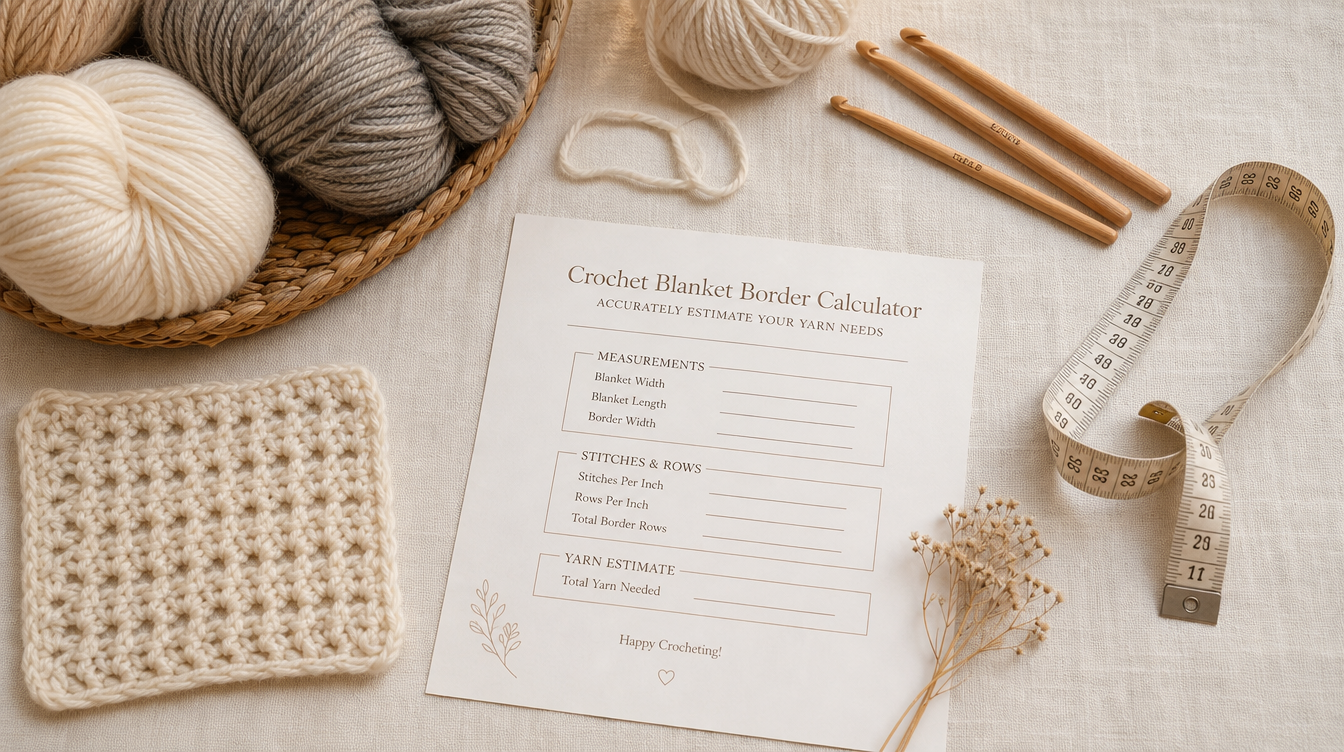
Understanding the Need for a Border Calculator
Adding a border to your crochet blanket can significantly elevate its aesthetic and functional appeal. Borders not only frame your beautiful work but also add stability and a finished look to your blanket. However, accurately calculating the required yarn yardage for your border can be quite challenging. This is where our crochet blanket border calculator becomes an invaluable tool for yarn crafters of all levels. Whether you're working on a cozy baby blanket or a larger throw, knowing how much yarn you'll need is essential to ensure project completion without unexpected interruptions.
Manual Calculation Methods for Blanket Borders
Before diving into the digital convenience of our tool, it's beneficial to understand the manual calculation method. This involves the Area Ratio Swatch Scaling Method, which provides a reliable estimate of yarn requirements:
- Measure Your Blanket: Calculate the area of your blanket by multiplying its length by its width. For instance, a baby blanket typically measures 30 x 36 inches, resulting in an area of 1080 square inches.
- Create a Swatch: Crochet a sample swatch using the intended border stitch pattern. Measure the swatch area. This step is crucial because it acts as a miniature model of your border.
- Yarn Usage Calculation: Determine the yardage used for the swatch. This can be done by weighing the swatch and comparing it to the total skein weight and yardage.
- Apply the Formula: Use the formula: Total Yardage = (Blanket Area / Swatch Area) * Swatch Yardage * 1.10 to estimate the total yardage needed for your border, including a 10% buffer for safety. This buffer accounts for variations in tension and unforeseen yarn consumption.
Factors Influencing Yarn Requirements
Several factors can influence how much yarn you'll need for your blanket border:
- Stitch Pattern: Textured stitches such as bobbles and puff stitches consume more yarn than flat stitches like single and double crochet. Consider the stitch pattern carefully to ensure you purchase enough yarn.
- Yarn Weight: Our calculator supports CYC #4 Worsted and CYC #3 DK weights, each requiring different yardages. Heavier yarns generally require more yardage for the same area.
- Hook Size: Consistent with your chosen yarn weight, use a 5.0 mm (H-8) hook for Worsted and a 4.0 mm (G-6) hook for DK. Using the correct hook size ensures that your stitches are uniform and that the border's drape complements the main blanket.
Yarn and Fiber Choices
The choice of yarn and fiber can affect both the look and the function of your blanket border. Wool offers warmth and elasticity, making it ideal for cozy throws. Acrylic yarns are versatile and easy to care for, while cotton provides a crisp finish and breathability, perfect for summer blankets. Regardless of the fiber, ensure that the yarn weight and texture are compatible with the main blanket to maintain consistency in drape and style.
Blocking Techniques
Blocking is an essential step in achieving a polished finish for your crochet blanket border. Wet blocking involves soaking the piece in water, gently shaping it, and allowing it to dry naturally. Steam blocking uses the heat and moisture of steam to shape the fabric. Both techniques help in smoothing out stitches and setting the border in place, ensuring it aligns perfectly with the rest of the blanket.
How Our Crochet Blanket Border Calculator Simplifies the Process
Our interactive crochet blanket border calculator streamlines the entire process by allowing you to input your blanket's dimensions, swatch details, and preferred stitch pattern. It then provides a precise yarn yardage estimate, eliminating tedious manual calculations and ensuring you have enough yarn to complete your project without interruptions. This tool is especially helpful for tackling the common maker pain point of underestimating yarn needs.
Troubleshooting Common Issues
While crafting your blanket border, you may encounter issues such as uneven tension or border curling. To address these, maintain consistent tension by practicing regular stitching speed and hand positioning. Additionally, if your border curls, gently block it, or adjust your stitch pattern to include more relaxed stitches.
Achieving the Perfect Border
Once you've calculated your yarn needs, consider the following tips to create a stunning border:
- Consistent Tension: Maintain uniform tension to ensure the border complements the main blanket. Inconsistent tension can lead to an uneven appearance and affect the blanket's durability.
- Stitch Pattern Selection: Choose a border stitch pattern that harmonizes with the blanket's design, enhancing both its beauty and durability. The border should not only look good but also withstand daily use and washing.
- Color Coordination: Ensure the border color complements or contrasts effectively with the main blanket, depending on your design preference. A well-chosen color can make the border stand out or seamlessly blend with the rest of the blanket.
Frequently Asked Questions
How much yarn do I need for a crochet blanket border?
Yarn requirements vary based on blanket size and border design. A baby blanket border may need 100 - 200 meters, while a throw could require 300 - 500 meters.
What hook size should I use for my blanket border?
Use a hook size that matches your yarn weight: 5.0 mm (H-8) for CYC #4 Worsted or 4.0 mm (G-6) for CYC #3 DK.
Can I use a different yarn for the border than the main blanket?
Yes, you can use different yarn, but ensure the yarn weight and fiber content are compatible to maintain the blanket's overall texture and drape.