Mastering Your Crochet Project with a Yarn Calculator
Learn how to accurately calculate yarn requirements for crochet projects using our comprehensive guide to the yarn calculator method.
WeLovePattern Editorial Team
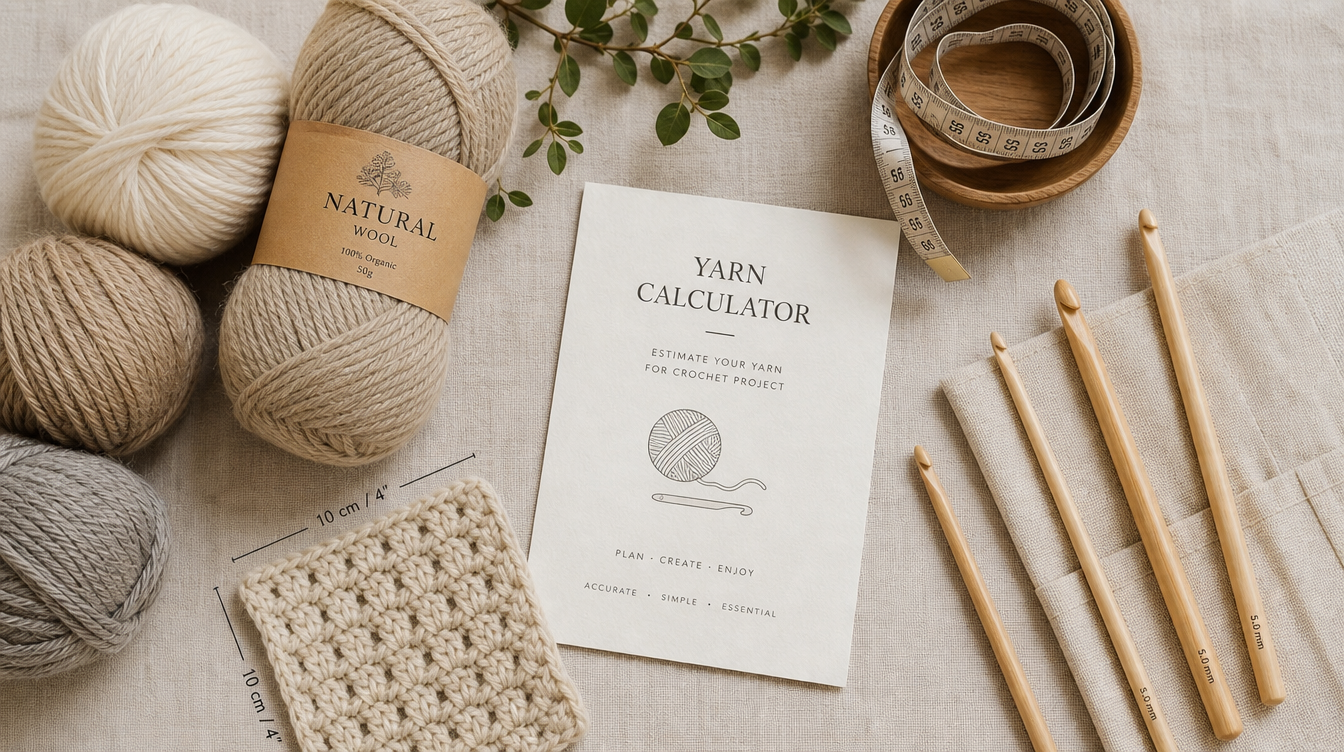
Understanding the Yarn Calculator
In the world of crochet, ensuring you have the right amount of yarn for your project is crucial. This is where a yarn calculator becomes an essential tool. Whether you're making a cozy throw blanket or a delicate baby blanket, accurate yarn estimation helps prevent running out of yarn mid-project and ensures consistent dye lots. A yarn calculator can help you plan your project, allowing you to focus on the joy of crocheting without the stress of yarn shortages.
Materials and Tools Needed
Before diving into calculations, gather the necessary materials:
- Yarn: Choose either CYC #4 Worsted or CYC #3 DK, depending on your project's texture and weight requirements. Worsted weight yarn is thicker, providing more warmth and texture, while DK weight is lighter and ideal for more delicate projects.
- Crochet Hook: Use a 5.0 mm (H-8) hook for worsted weight yarn or a 4.0 mm (G-6) hook for DK weight yarn. The hook size impacts the tension and drape of your project.
- Measuring Tape: For precise swatch measurements, ensuring your calculations are accurate.
- Scale: To measure the weight of yarn before and after swatch creation. This helps determine the yardage used in your swatch.
Creating and Measuring Your Swatch
Creating a gauge swatch is the first step in using a yarn calculator effectively. It allows you to understand how your chosen yarn and stitch pattern will behave:
- Crochet a Swatch: Make a small sample using your chosen stitch pattern. This allows you to measure the yarn's behavior and tension. For instance, if you're using textured stitches like bobbles, you may notice they consume more yarn.
- Measure the Swatch: Use a measuring tape to determine the length and width of your swatch in inches or centimeters. Ensure your measurements are precise for accurate calculations.
- Calculate the Area: Multiply the length by the width to find the swatch area. This will help you scale your swatch to the size of your intended project.
- Measure Yarn Usage: Weigh your yarn before and after creating the swatch to determine the yardage used. This step is crucial for calculating the total yarn requirement for your larger project.
Calculating Total Yarn Requirement
Once your swatch is ready, use the Area Ratio Swatch Scaling Method to calculate the total yarn needed:
- Determine Blanket Area: Calculate the area of your intended crochet project. For example, a baby blanket measures 30 x 36 inches, while a throw blanket measures 50 x 60 inches.
- Apply the Formula: Use the formula: Total Yardage = (Blanket Area / Swatch Area) * Swatch Yardage * 1.10. The 10% buffer accounts for variations and errors, such as differences in tension or stitch type.
Considerations for Different Stitch Patterns
The type of stitches in your project significantly affects yarn consumption. Textured stitches like bobbles and puff stitches tend to use more yarn than flat stitches such as single or double crochet. Factor this into your calculations by potentially adjusting your buffer to 15% if using highly textured stitches. This ensures you don't run out of yarn mid-project, especially when creating intricate designs.
Fiber Choices and Their Impact
Choosing the right fiber for your project can affect both the appearance and the amount of yarn needed. Wool, for instance, is warm and has excellent elasticity, making it a good choice for projects that require some stretch. Acrylic is more affordable and versatile, ideal for beginners or projects that will see heavy use. Cotton, however, is breathable and perfect for lighter, summer projects, though it may not have the same elasticity as wool.
Blocking Techniques
Blocking is an essential step in finishing your crochet projects, helping to even out stitches and give your piece a professional look. Wet blocking involves soaking your finished piece in water and pinning it to the desired shape, while steam blocking uses a steam iron to relax the fibers. Each method has its benefits, with wet blocking being ideal for natural fibers like wool, and steam blocking working well for acrylics. Blocking can also help address issues like uneven tension or border curling.
Practical Tips for Yarn Calculation
While the yarn calculator method is reliable, here are some additional tips to ensure success:
- Consistency in Dye Lots: Purchase all your yarn at once to maintain color consistency. Dye lot numbers are crucial for avoiding shade variations, which can be noticeable in large projects like blankets.
- Recheck Measurements: Verify your swatch measurements to ensure accuracy in your calculations. Even small discrepancies can lead to significant differences in the final yardage required.
- Keep Extra Yarn: Having a little extra yarn is always a good idea, especially for final touches or if you encounter an unforeseen error. This extra yarn can also be useful for repairs or matching accessories.
Troubleshooting Common Issues
Even with careful planning, issues can arise in your crochet projects. Uneven tension can lead to inconsistent stitches, which affects the yardage calculation. Practice maintaining a consistent tension throughout your swatch creation. If you notice your borders curling, it may be due to tension differences or stitch pattern choices; consider adjusting your hook size or adding a border in a simpler stitch to stabilize the edges.
Frequently Asked Questions
How do I calculate yarn needed for a blanket?
Create a swatch, measure its area, calculate the yardage used, then use the Area Ratio Swatch Scaling Method to estimate total yardage needed.
Why is a safety buffer important in yarn calculation?
A safety buffer ensures you have enough yarn to account for variations in tension, stitch type, and potential errors. It provides peace of mind that you won't run short during your project.
Does the type of stitch affect the amount of yarn needed?
Yes, textured stitches like bobbles and puff stitches use more yarn than simpler stitches like single crochet. This is due to the additional yarn required to create the texture and depth in these stitches.