Easy and Cozy Fall Crochet Projects for Beginners
Discover beginner-friendly fall crochet projects, including cozy scarves and hats, with comprehensive guides and tips for every new crafter.
WeLovePattern Editorial Team
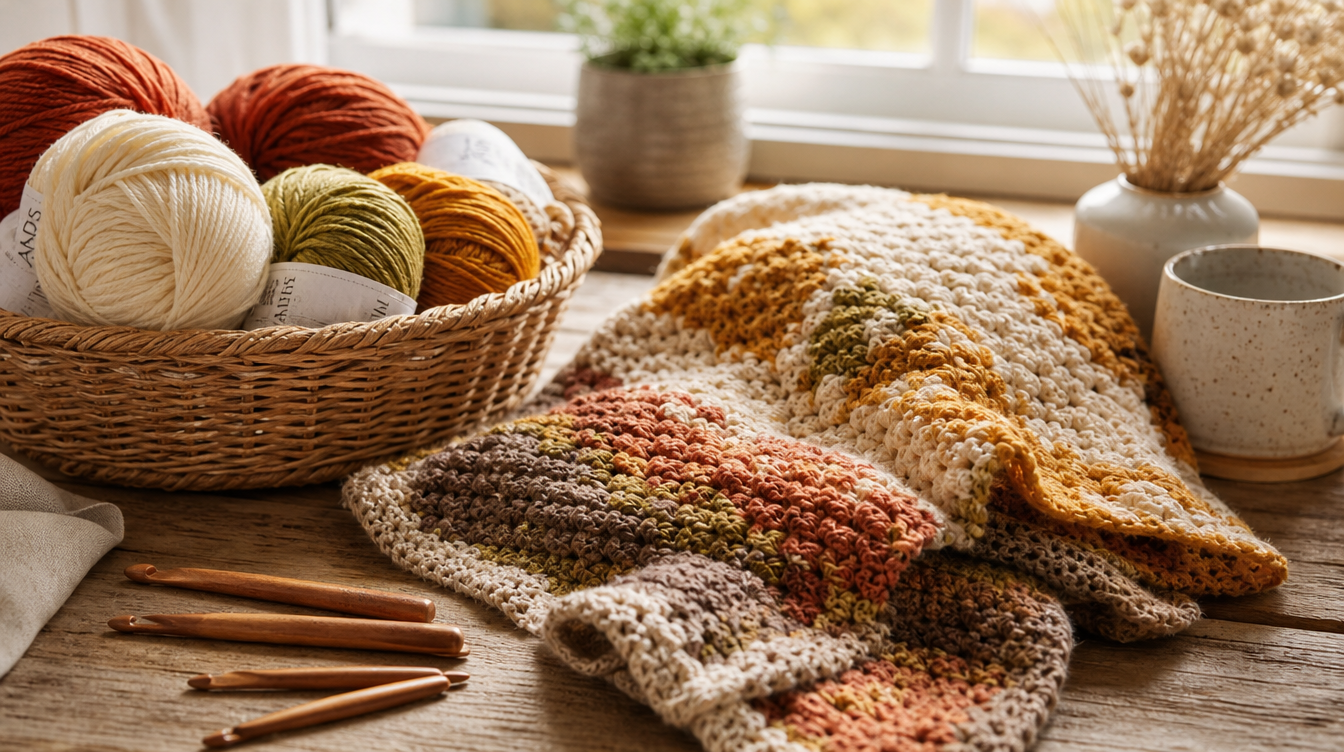
Welcome to Fall Crochet: Beginner-Friendly Projects
As the leaves begin to change and the chill of fall sets in, it's the perfect time to cozy up with a new crochet project. Whether you're new to the craft or looking to hone your skills, we've curated a selection of simple and rewarding projects that are perfect for beginners. This guide will walk you through creating warm scarves and snug hats, using basic stitches and techniques suited for fall.
Materials and Tools You Will Need
Before you begin your crochet journey, gathering the right materials and tools will set you up for success. Here are the essentials:
Yarn
- Weight: Medium / Worsted (#4) yarn is recommended for fall projects because of its warmth and stitch definition. It provides a balance between ease of use and the cozy texture needed for fall accessories.
- Yardage: For a scarf, you'll need about 250 to 400 meters, and for a hat, approximately 120 to 200 meters. These estimates allow for a little extra, ensuring you have all you need to complete your project without running short.
Crochet Hooks
- Sizes: Use a 5.0 mm (H-8) or 4.0 mm (G-6) hook, depending on your yarn and desired tension. A larger hook can help create a softer drape, while a smaller hook offers more structure.
Additional Tools
- Scissors
- Tapestry needle for weaving in ends
- Stitch markers to help keep track of your rows, especially if you are doing repetitive patterns or rounds.
Choosing the Right Yarn
Your choice of yarn can significantly impact the look and feel of your finished project. Here are some considerations:
- Wool: Ideal for warmth and elasticity, making it perfect for hats and scarves. Wool can be more expensive but offers excellent insulation and moisture-wicking properties.
- Acrylic: A budget-friendly option that is easy to care for, machine washable, and available in various colors. It’s a good choice for beginners who are practicing and might need to redo sections.
- Cotton: While not as warm as wool, cotton is durable and has a nice stitch definition. It's great for projects that don’t require much elasticity, like dishcloths or lightweight scarves.
Learning Basic Stitches
For beginners, mastering the foundational stitches is crucial. The primary stitches you'll use in these projects are the single crochet (sc) and double crochet (dc).
Single Crochet (sc)
- Insert your hook into the stitch.
- Yarn over and pull through the stitch (two loops on hook).
- Yarn over again and pull through both loops on the hook.
Double Crochet (dc)
- Yarn over, then insert your hook into the stitch.
- Yarn over and pull through the stitch (three loops on hook).
- Yarn over and pull through the first two loops (two loops remain).
- Yarn over and pull through the remaining two loops.
Understanding Swatch Calculations
Creating a swatch is an essential step in ensuring your project will turn out the right size and use the correct amount of yarn. Here's how you can calculate the necessary yardage:
- Crochet a Swatch: Work a small piece of your pattern, typically 4x4 inches (10x10 cm).
- Measure the Dimensions: Use a ruler to measure the length and width of your swatch.
- Calculate the Area: Multiply the length by the width to find the area of your swatch.
- Measure Yarn Used: Determine how much yarn was used to create the swatch.
- Calculate Total Yardage: Use the formula: Total Yardage = (Blanket Area / Swatch Area) * Swatch Yardage * 1.10. This accounts for a 10% safety buffer to avoid running out of yarn.
Crochet Project 1: Cozy Fall Scarf
The classic fall scarf is an ideal project for beginners. It offers a straightforward introduction to crochet with plenty of room to practice tension and stitch consistency.
Steps to Create a Simple Scarf
- Chain 25 (or as wide as you'd like your scarf to be).
- Turn your work, and begin with a row of single crochet.
- Continue by alternating rows of single crochet and double crochet until the scarf reaches your desired length, typically 60 inches (about 152 cm).
- Finish with a row of single crochet for a neat edge.
Remember to maintain even tension throughout to ensure a consistent texture. Use stitch markers to help keep track of rows if needed.
Crochet Project 2: Warm and Snug Hat
Once you've mastered the scarf, a warm hat is a natural next step. This project introduces you to working in the round, essential for many crochet patterns.
Steps to Create a Basic Beanie
- Begin by making a magic ring and crocheting 12 double crochets into the ring. Join with a slip stitch to form a circle.
- For the next round, work 2 double crochets in each stitch to increase the circle's size.
- Continue increasing until the circle's diameter matches the width of your head.
- Once the desired width is achieved, work even in double crochet (without increases) until the hat reaches the desired height.
- Finish with a row of single crochet for a tidy brim.
Use a tapestry needle to weave in any loose ends, and your hat is ready to wear!
Blocking Your Finished Projects
Blocking is a finishing technique that helps even out stitches and shape your project. Here are two common methods:
- Wet Blocking: Soak your finished project in lukewarm water, gently squeeze out excess water, then lay it flat on a towel to dry, shaping it as needed.
- Steam Blocking: Use a steam iron to lightly press your project, covering it with a damp cloth to avoid direct heat contact. This is quicker but requires more caution with heat-sensitive fibers.
Troubleshooting Common Issues
Even experienced crocheters encounter challenges. Here are some common issues and solutions:
- Uneven Tension: Practice makes perfect. Try to maintain a relaxed grip on your yarn and hook, adjusting your hook size if needed.
- Border Curling: This can often be resolved by blocking or by adding a few rows of single crochet around the edges.
- Yarn Splitting: Ensure your hook is the right size for your yarn and avoid splitting by inserting the hook cleanly through the stitches.
- Pattern Confusion: Familiarize yourself with common abbreviations and terms. Keep a glossary or reference guide nearby to clarify any uncertainties as you work.
Helpful Tips and Variations
Crochet is a versatile craft that allows for many personal touches. Here are some tips and variations to consider:
- Experiment with Colors: Choose a yarn color that reflects your style. Variegated yarns can add interest to simple patterns.
- Add Textures: Once you're comfortable with basic stitches, try incorporating textured stitches like bobbles or puff stitches for added flair.
- Use Stitch Markers: These are invaluable for keeping track of rounds and repeated patterns, especially in larger projects like blankets.
- Practice Tension: Consistent tension is key to successful crochet. If you find your work is too tight or loose, adjust your hook size accordingly.
Frequently Asked Questions
What is a good beginner project for fall?
A simple scarf or beanie using a basic stitch like single crochet or double crochet is ideal for beginners.
How much yarn do I need for a fall scarf?
Typically, a fall scarf requires between 250 to 400 meters of worsted weight yarn.
What is the best yarn weight for fall projects?
Medium / Worsted (#4) yarn is versatile for fall projects and provides warmth and stitch definition.
With this guide, you're well on your way to creating beautiful and functional crochet pieces that will keep you snug through the fall and beyond. Happy crocheting!