Mastering Your Crochet Projects with Our Yarn Calculator
Discover how to accurately calculate yarn for any crochet project using our interactive Yarn Calculator. Perfect results every time!
WeLovePattern Editorial Team
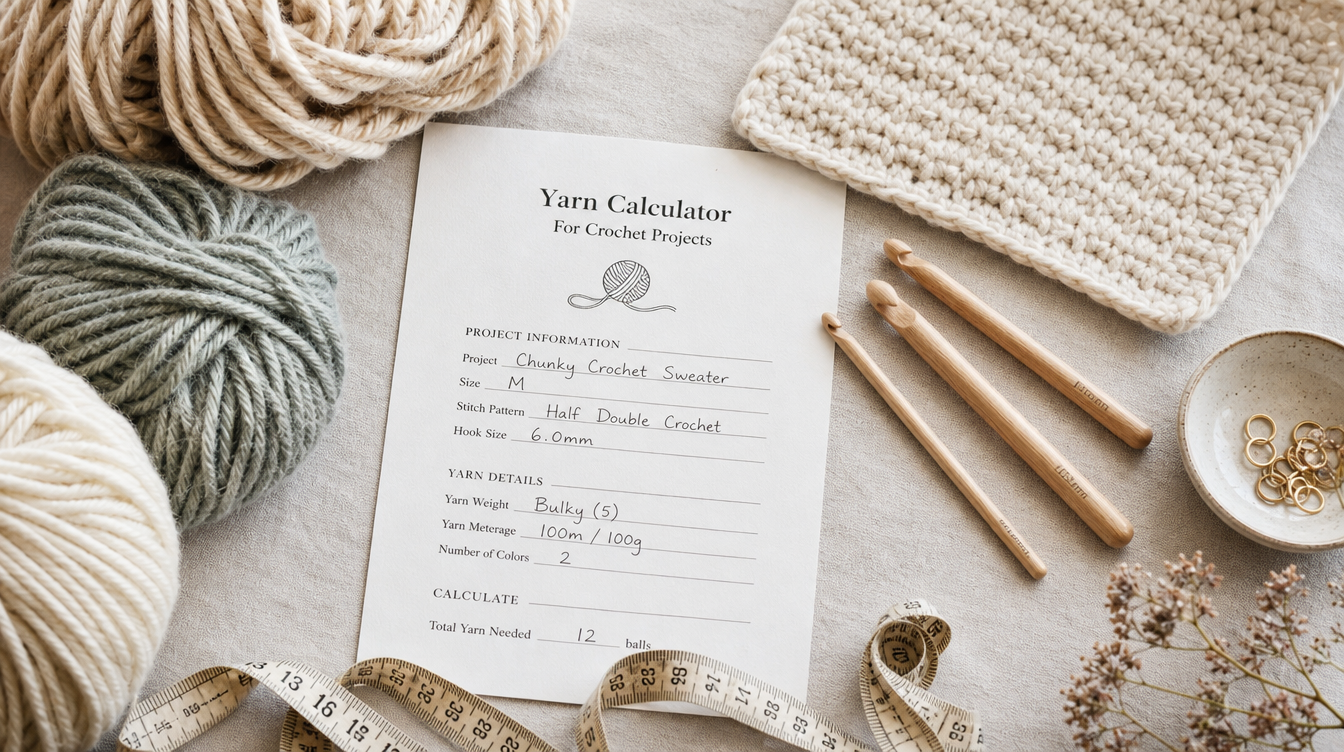
The Practical Challenge: Estimating Yarn for Crochet Projects
Every crocheter, whether a novice or a seasoned expert, has faced the perplexing question: How much yarn do I need for my project? Estimating yarn accurately is crucial to ensure that you have enough to complete your beautiful creations without running out midway. This is where a yarn calculator becomes an indispensable tool.
A yarn calculator helps you estimate the total yards or meters and skeins needed for specific projects such as blankets, sweaters, baby items, and plushies. This tool considers the dimensions you desire, the type of stitch you choose, and your tension. By using a yarn calculator, you can ensure that your project runs smoothly from start to finish.
Manual Calculation: The Area Ratio Swatch Scaling Method
Before diving into the convenience of our Yarn Calculator, it's essential to understand the manual method of calculating yarn requirements. This foundational knowledge will enhance your crochet skills and give you confidence in your projects.
Steps to Calculate Manually:
- Create a Swatch: Crochet a small swatch using your desired stitch pattern. Measure its area by multiplying its length by its width. This swatch will act as a mini-representation of your project, allowing you to gauge the amount of yarn needed.
- Measure Yarn Usage: Determine the amount of yarn used for the swatch by weighing it or using a yardage counter. This step is crucial as it translates the small-scale swatch use to the larger project scope.
- Calculate Blanket Area: For your final project, calculate the area using the verified dimensions. For example, a baby blanket measures 30 x 36 inches (76 x 91 cm). This calculation ensures that you know the full scale of your intended project.
- Apply the Formula: Use the Area Ratio Swatch Scaling Method: Total Yardage = (Blanket Area / Swatch Area) * Swatch Yardage * 1.10. This formula includes a 10% buffer to cover any discrepancies.
By following these steps, you'll have a rough estimate of the yarn needed. However, manual calculations can be tedious and prone to errors, especially if you are not confident in your math skills.
The WeLovePattern Yarn Calculator: Your Interactive Solution
To eliminate the potential for error and simplify the process, we recommend using the WeLovePattern Yarn Calculator. This user-friendly tool takes the guesswork out of yarn estimation, allowing you to focus on the creative aspects of crochet.
Here's how to use it effectively:
- Input Project Dimensions: Enter the dimensions of your intended project, such as those for a lapghan or throw blanket. Knowing these dimensions upfront helps the calculator provide precise estimates.
- Select Yarn Weight and Hook Size: Choose from approved yarn weights like CYC #4 Worsted or CYC #3 DK, and select the corresponding hook size recommended. The combination of yarn weight and hook size influences the texture and density of your stitches.
- Stitch Type and Tension: Specify your stitch type. Remember, textured stitches like bobbles consume more yarn than flat stitches such as single or double crochet. This input helps the calculator adjust the yarn estimate according to stitch complexity.
- Receive Instant Estimates: The calculator will provide an accurate estimate of the total yards/meters and the number of skeins needed, factoring in a safety buffer. This feature is invaluable in preventing mid-project yarn shortages.
By using our Yarn Calculator, you ensure precision, save time, and avoid the frustration of running out of yarn mid-project.
Yarn Calculator
Estimate total yards/meters and skeins needed for blankets, sweaters, baby items, and plushies.
Practical Usage Tips and Troubleshooting
To maximize the benefits of the yarn calculator, consider these practical tips:
Maintain Consistent Tension:
Ensure your tension remains consistent between your swatch and the final project. This consistency is crucial for accuracy in yardage calculations. Inconsistencies can lead to incorrect estimates and an uneven finished project.
Mind the Dye Lot:
Purchase enough yarn from the same dye lot to maintain uniformity in color throughout your project. Dye lot variations can subtly alter the appearance of your project, especially when working with large, continuous pieces.
Consider Stitch Consumption:
Textured stitches require more yarn than flat ones. Plan your project accordingly to avoid surprises. If you are planning a detailed or highly textured project, make sure to account for the increased yarn usage.
Understanding Fiber Choices and Their Impact
The type of fiber you choose can significantly affect your crochet project. Wool, for example, offers warmth and elasticity, making it ideal for projects like blankets that benefit from some stretch. Acrylic is a versatile and budget-friendly option that provides durability and ease of care, making it perfect for everyday items. Cotton, while less elastic, is excellent for lightweight and breathable projects, offering a crisp texture that highlights intricate stitch patterns.
Blocking Techniques: Enhancing Your Finished Project
Blocking is a crucial step in finishing your crochet project as it helps to even out the stitches and enhance the overall appearance. Wet blocking involves soaking the item in water, gently squeezing out excess moisture, and pinning it to shape. Steam blocking, on the other hand, uses steam to relax the fibers, allowing you to shape the project without fully immersing it in water. Both methods can correct minor tension issues, such as border curling, ensuring your project lays flat and looks polished.
Frequently Asked Questions
How do I calculate the amount of yarn needed for my project?
Use a yarn calculator by first making a swatch, then measuring the yarn used for the swatch. Calculate the area of your final project and apply the Area Ratio Swatch Scaling Method.
Why do different stitch types affect yarn usage?
Textured stitches such as bobbles and puff stitches use more yarn than flat stitches because they require more loops and layers.
What's the importance of maintaining the same tension?
Consistent tension ensures that your project matches the intended dimensions and the yardage calculations remain accurate.
By mastering the use of a yarn calculator and understanding the principles of yarn estimation, you can approach each crochet project with confidence and creativity. Let's Calculate Yarn →