Mastering Crochet Hook Size Charts: Metric to US & More
Discover how to convert crochet hook sizes from mm to US, UK, and Japanese standards. Learn how to achieve perfect gauge and fabric texture.
WeLovePattern Editorial Team
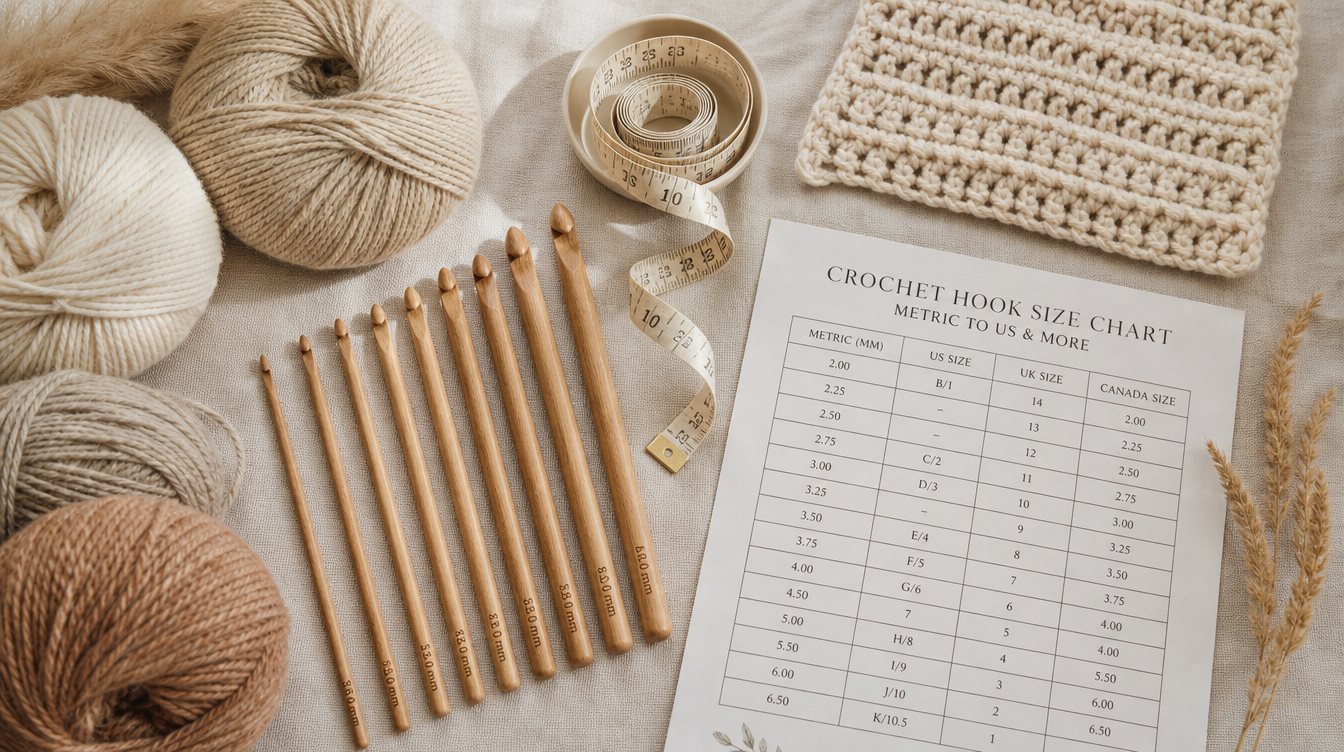
Understanding Crochet Hook Sizes
When embarking on a new crochet project, one of the most crucial steps is selecting the correct hook size. Whether you're creating a cozy blanket or an intricate accessory, the right hook size ensures that your stitches are the correct size and your finished item aligns with the intended dimensions and texture. But what happens when the pattern you adore uses a different sizing system than what you’re accustomed to? That’s where understanding crochet hook size charts becomes essential. In this guide, we'll explore how to convert metric millimeter (mm) hook sizes to US, UK, and Japanese standards, ensuring your projects turn out perfectly, every time.
The Importance of Hook Size in Crochet
Using the correct crochet hook size is critical for maintaining the integrity of your design, especially if you’re following a specific pattern. An incorrect hook size can lead to a garment or accessory that’s either too large or too small, and can significantly alter the drape and feel of the fabric. The hook size impacts the tension of your stitches, which in turn affects the gauge—an essential factor for achieving the desired look and fit of your crochet project.
Choosing the Right Hook Size
Choosing the right hook size begins with understanding the yarn you’re working with. Most yarn labels provide a recommended hook size, typically given in millimeters, and may include a corresponding letter or number code. For example, worsted weight yarn (CYC #4) might suggest a 5.5 mm (I-9) hook. Following these recommendations helps ensure that your project has the intended drape and stitch definition.
Additionally, the material of the hook can affect your crocheting experience. Hooks come in various materials such as aluminum, bamboo, and plastic. Each material offers different levels of grip and comfort, which can influence your tension and speed. Aluminum hooks, for instance, are smooth and allow for quick movement, while bamboo hooks provide a warmer, more comfortable grip that's beneficial for extended crochet sessions.
Manual Conversion of Hook Sizes
If you’re trying to convert hook sizes manually, you’ll need a reliable chart. Here’s a quick guide to understanding the basics:
- Metric (mm): The diameter of the hook in millimeters.
- US Sizes: Lettered from B-1 (2.25 mm) to N/P-15 (10.0 mm).
- UK Sizes: Numbered inversely, where smaller numbers correspond to larger hooks.
- Japanese Sizes: Often use a mix of numbers and letters, which can be challenging to memorize.
Example Conversion
Consider you have a 4.0 mm hook. In US sizing, this is a G-6, while in UK sizing, it might not have a direct equivalent but would be close to a 7. Japanese sizing would need to be checked against a specific conversion chart.
Effortless Conversion with Our Hook Size Converter
While manual conversion is possible, it’s prone to errors, especially if you’re new to crochet or working with unfamiliar systems. That’s why our WeLovePattern Hook Size Converter is an invaluable tool. By entering the metric size of your hook, you can instantly see its equivalent in US, UK, and Japanese sizes. This eliminates the guesswork and ensures your project maintains its intended scale and texture.
How to Use the Converter
- Navigate to the Hook Size Converter.
- Enter the metric size (mm) of your crochet hook.
- View the instantly converted sizes in US, UK, and Japanese standards.
With this tool, you can confidently transition between patterns from different regions and craft with ease.
Practical Application and Tips
Matching your hook size to the yarn weight is crucial for achieving the desired fabric density, impacting both the visual and physical aspects of your project. Remember, using a smaller hook results in a denser fabric, perfect for structured items, while a larger hook creates a looser, more flexible fabric, ideal for draped garments.
Swatch Calculations and Yarn Choices
To ensure you have the right amount of yarn, it's essential to calculate the yardage based on your swatch. Using the Area Ratio Swatch Scaling Method, you can determine the total yardage needed:
- Step 1: Measure the dimensions of your swatch to calculate the Swatch Area.
- Step 2: Measure the dimensions of your desired blanket to calculate the Blanket Area.
- Step 3: Calculate the Total Yardage using the formula: Total Yardage = (Blanket Area / Swatch Area) * Swatch Yardage * 1.10.
- Step 4: Include a 10% buffer for safety.
Choosing the right fiber is also crucial. Wool offers warmth and elasticity, making it great for garments. Acrylic is versatile and easy to care for, ideal for everyday items, while cotton provides breathability, perfect for summer projects.
Blocking Techniques
Blocking is a crucial step in finishing your crochet piece, ensuring it holds its shape and size. Wet blocking involves soaking your piece, then shaping it while damp. Steam blocking uses a steam iron to gently shape your fabric. Both methods can help in achieving a more professional finish.
Common Issues and Solutions
Many crafters struggle with maintaining a consistent gauge. If you find your stitches too tight or too loose, try adjusting your hook size. Test your gauge by making a small swatch, then measure it and adjust accordingly. Uneven tension can also cause border curling; ensure your edge stitches are not pulled too tightly.
Hook Size Converter
Convert metric millimeter (mm) hook sizes to US letter sizes, UK numbers, and Japanese sizes.
Frequently Asked Questions
What is the significance of using the correct crochet hook size?
Using the correct hook size ensures that the stitches are the right size and the finished item has the correct dimensions and texture.
How do I choose the right hook size for my yarn?
Refer to the yarn label for the recommended hook size, which is typically given in millimeters and may include a letter/number code.
Can I use a different hook size than recommended?
Yes, but it will affect your gauge; using a smaller hook will result in a denser fabric, while a larger hook will create a looser one.
By mastering the use of crochet hook size charts and leveraging tools like the Hook Size Converter, your projects will reflect precision and creativity. Happy crocheting!