Mastering Yarn Substitution: Find Perfect Matches Easily
Unlock the secrets of yarn substitution with our Yarn Substitute Finder. Ensure perfect fiber, gauge, and weight compatibility effortlessly.
WeLovePattern Editorial Team
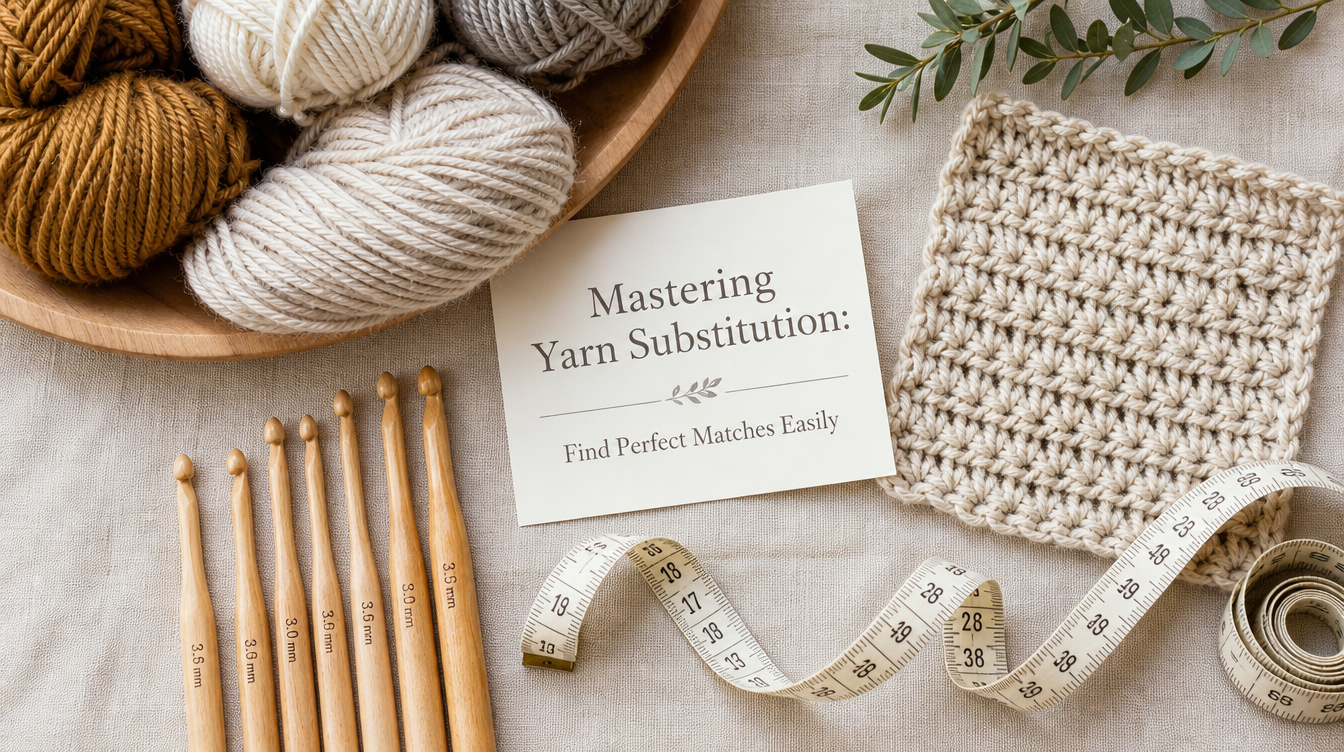
Understanding the Need for Yarn Substitution
In the world of crochet, choosing the perfect yarn is crucial to achieving the desired look, feel, and functionality of a project. However, the recommended yarn may not always be available, or it may be discontinued or outside your budget. This is where yarn substitution becomes essential. When substituting yarns, it's important to consider factors such as fiber content, gauge, and weight to maintain the integrity of your project. Our Yarn Substitute Finder is designed to streamline this process, ensuring you find compatible yarns effortlessly.
The Challenges of Manual Yarn Substitution
Substituting yarn manually can be a daunting task. Crafters must meticulously compare yarn labels, check fiber compositions, and match gauges. Additionally, one must consider the drape and texture differences that could affect the final outcome. Without a systematic approach, it's easy to make errors that can lead to unsatisfactory results. Below, we'll outline the manual steps involved and introduce a more efficient solution.
Manual Steps for Yarn Substitution
- Identify Fiber Content: Always check the fiber content of the original yarn. This ensures the substitute will behave similarly in terms of stretch, drape, and overall feel. For example, wool is known for its elasticity and warmth, whereas cotton provides a cooler, less stretchy option.
- Check the Gauge: Compare the gauge information on the yarn labels. Adjust your hook size if necessary to achieve the desired gauge. This adjustment is critical to ensure the size and fit of your project remain consistent with the pattern's intention.
- Consider the Weight: Match the weight category (e.g., CYC #4 Worsted) to ensure your project maintains its intended size and shape. Using a different yarn weight can significantly alter the project's dimensions and drape, which is why careful consideration is necessary.
By following these steps, you'll have a foundational understanding of how to approach yarn substitution. However, a more streamlined solution can save time and reduce errors.
Introducing the WeLovePattern Yarn Substitute Finder
Our interactive Yarn Substitute Finder is designed to eliminate the guesswork and potential errors of manual substitution. This tool not only saves you time but also ensures that the yarns you choose will match your project's needs accurately.
Using the Yarn Substitute Finder
- Enter Original Yarn Details: Input the fiber content, gauge, and weight class of your current yarn. This forms the basis of finding a suitable alternative that closely matches all essential characteristics.
- Explore Compatible Yarns: The tool will generate a list of yarns that match your criteria, ensuring compatibility in all necessary aspects, such as texture and drape, which are vital for the success of your project.
- Review and Select: Browse through the options, considering additional factors like color and availability, to make your final choice. Ensure the color and dye lot of your substitute yarn meet the requirements of your project to avoid any unexpected variations in the finished piece.
With this tool, you'll have access to a wide range of substitutes that align perfectly with your project requirements.
Practical Application and Tips
When using substitute yarns, it's essential to keep a few practical tips in mind to ensure success:
- Swatch Testing: Always create a swatch with your substitute yarn to verify gauge and drape before committing to a full project. This is a crucial step to prevent any surprises once your project is fully underway.
- Adjust Hook Size: If the gauge doesn't match exactly, try adjusting your hook size. Recommended hook sizes include 5.0 mm (H-8), 4.0 mm (G-6), and 6.5 mm (K-10.5). This flexibility allows you to maintain the integrity of your design.
- Monitor Yardage: Be aware of the total yardage required. For instance, a standard baby blanket typically needs 700 to 1,000 meters of yarn. Calculating the area of your project using the Area Ratio Swatch Scaling Method can help you determine the proper yardage needed.
- Blocking Techniques: Different fibers may require specific blocking techniques to achieve the desired finish. For instance, wool can be wet blocked to enhance its shape, while acrylic may respond better to steam blocking.
Consider these tips and techniques to ensure your crochet project turns out as envisioned, even when using substitute yarns.
Yarn Substitute Finder
Find compatible alternative yarns with identical fiber content, gauge, and weight class.
Frequently Asked Questions
How do I find a yarn substitute that matches my pattern's gauge?
To find a matching yarn substitute, compare the gauge information on the yarn label and adjust your hook size if necessary to achieve the desired gauge.
Can I use a different yarn weight than recommended in a pattern?
Using a different yarn weight can alter the size and drape of the project. You should check gauge and may need to adjust the pattern or hook size.
Why is fiber content important when substituting yarns?
Fiber content affects the yarn's stretch, drape, and appearance. It's crucial to match fiber content to preserve the intended characteristics of the finished project.
By understanding and utilizing these principles, you'll be able to substitute yarns with confidence, ensuring your crochet projects are both beautiful and functional. Use our Yarn Substitute Finder today to make your yarn substitution process seamless and accurate.