Mastering Your Crochet Price Calculator for Fair Pricing
Discover how to calculate fair selling prices for crochet crafts using a price calculator. Learn to factor in costs, labor, and profit.
WeLovePattern Editorial Team
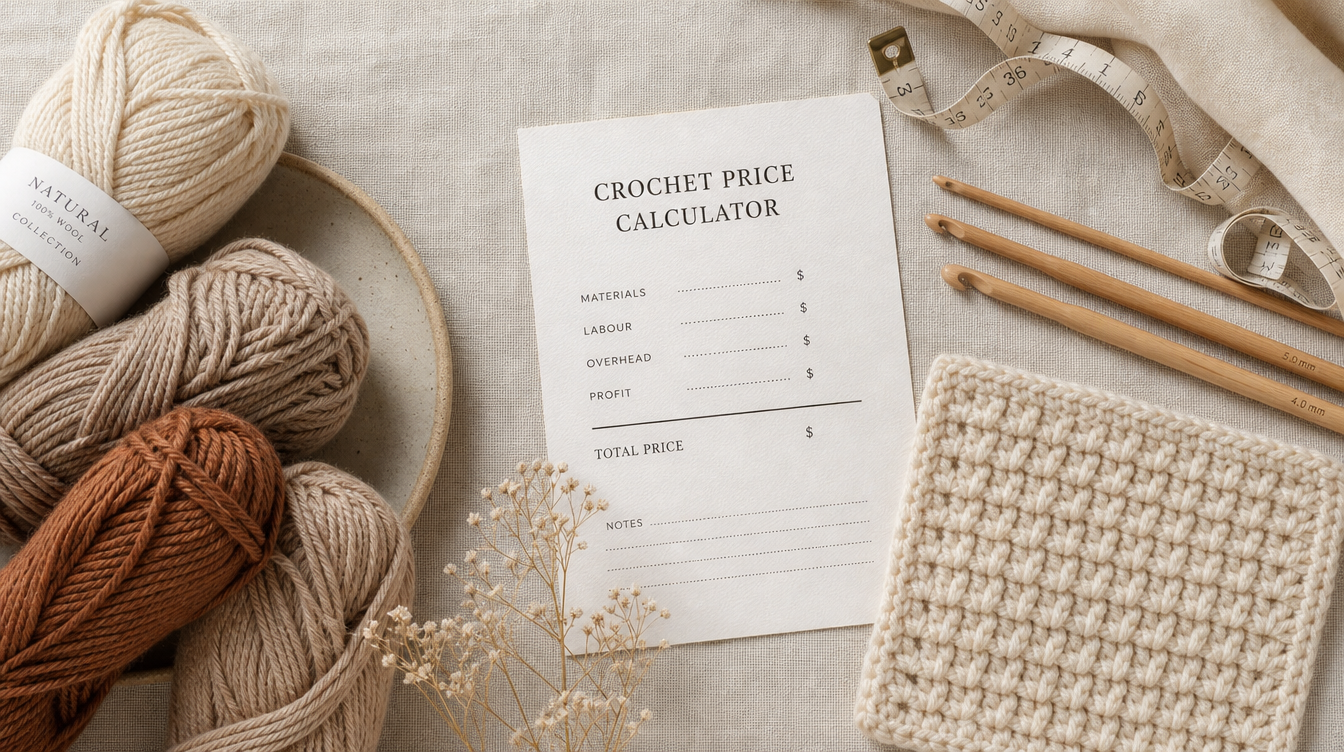
Understanding the Crochet Price Calculator
Creating beautiful crochet items is a labor of love, but pricing them correctly can often be a daunting task. Whether you're selling a cozy baby blanket or a stylish scarf, it's essential to calculate a fair selling price that reflects the cost of materials, your time, and a reasonable profit margin. This guide will delve into the details of using a crochet price calculator to ensure you're compensated fairly for your craftsmanship.
The Components of Crochet Pricing
Material Costs
The foundation of pricing your crochet projects starts with understanding the cost of materials. Yarn is your primary material, and its cost can vary significantly based on type, weight, and quality. For example, a CYC #4 Worsted weight yarn might be priced differently than a CYC #3 DK weight yarn. Be sure to account for all materials, including embellishments or additional supplies like buttons or zippers. It's also crucial to purchase yarns from the same dye lot to maintain color consistency throughout your project.
Labor Costs
Next, consider your labor. Pricing your time can be challenging, but it's crucial for sustainable pricing. Decide on an hourly rate that compensates you fairly for your time and expertise. Consider the complexity of the stitches used, as more intricate patterns involving textured stitches such as bobbles and puff stitches will require more time and use more yarn than simpler stitches like single crochet. Your labor cost should reflect not just the time spent crocheting but also the time spent planning, sourcing materials, and finishing the piece.
Profit Margin
Finally, add a profit margin. This margin should reflect the value of your design and the uniqueness of your handmade item. A common approach is to apply a percentage that covers both your costs and your desired profit. The profit margin ensures that your business remains sustainable, allowing for reinvestment into materials and tools while providing you with a financial reward for your craftsmanship and creativity.
Manual Calculation Steps
While using a calculator streamlines the process, understanding the manual calculation steps is valuable:
- Calculate Material Costs: Sum up the cost of all materials used in your project.
- Determine Labor Costs: Multiply your hourly rate by the number of hours spent on the project.
- Add Overhead Costs: Include any additional costs such as marketing or packaging.
- Apply Profit Margin: Add a percentage for profit to the sum of material, labor, and overhead costs.
These steps provide a foundational understanding of the pricing process, but they can be prone to errors if done manually.
Introducing the WeLovePattern Selling Price Calculator
To eliminate the possibility of manual errors and ensure precise calculations, the WeLovePattern Selling Price Calculator is your go-to tool. This dedicated calculator simplifies the process, allowing you to enter the cost of materials, your labor rate, and your desired profit margin, generating a fair selling price with just a few clicks.
Using the Calculator Effectively
To use the calculator:
- Input the total cost of materials, including yarn and embellishments.
- Enter your hourly labor rate and the time spent on the project.
- Specify your desired profit margin percentage.
- Click “Let's Calculate Selling Price →” to receive an accurate selling price recommendation.
This tool ensures you account for all variables, providing peace of mind that your pricing is both fair and competitive.
Selling Price Calculator
Calculate fair retail selling prices for craft items incorporating yarn cost, labor rate, and profit margin.
Practical Application and Troubleshooting
Using the calculator in real-world scenarios helps refine your pricing strategy. Consider these practical tips:
- Swatch and Measure: Always swatch your yarn to gauge how much you’ll need. Use the Area Ratio Swatch Scaling Method to estimate yarn requirements accurately. Accurate swatching ensures that you don't run out of yarn mid-project and helps in maintaining consistency in texture and tension.
- Adjust for Complexity: If your project involves textured stitches, remember they require more yarn and time. This is crucial for accurate cost estimation, ensuring that the additional work and materials are accounted for in the final price.
- Monitor Market Trends: Stay informed about yarn prices and market demand to adjust your pricing strategy as needed. Being aware of market trends can help you price your items competitively while ensuring a profit.
- Troubleshoot Common Issues: Address common crochet issues like uneven tension or border curling by adjusting your technique or using blocking. Blocking, whether wet or steam, can help in setting your crochet pieces into the desired shape and size, enhancing the finished look.
Frequently Asked Questions
How can I accurately price my crochet items?
Consider the cost of materials, your hourly rate for labor, and any additional overhead costs. Use a consistent pricing formula to ensure fair compensation.
How do different stitches affect yarn usage?
Textured stitches such as bobbles and puff stitches use more yarn compared to flat stitches like single crochet and double crochet.
Why is it important to consider the dye lot when buying yarn?
Yarn from different dye lots can have slight variations in color, which could affect the uniformity of the finished project.
By following this comprehensive guide, you can confidently price your crochet items, ensuring that your passion and hard work are rewarded appropriately. Armed with the right tools and knowledge, your crochet business can thrive, offering beautiful handmade pieces that are both cherished by your customers and profitable for you.