Understanding and Fixing Crochet Edge Curling Issues
Learn why crochet edges curl and discover effective techniques to prevent and correct curling for a professional finish.
WeLovePattern Editorial Team
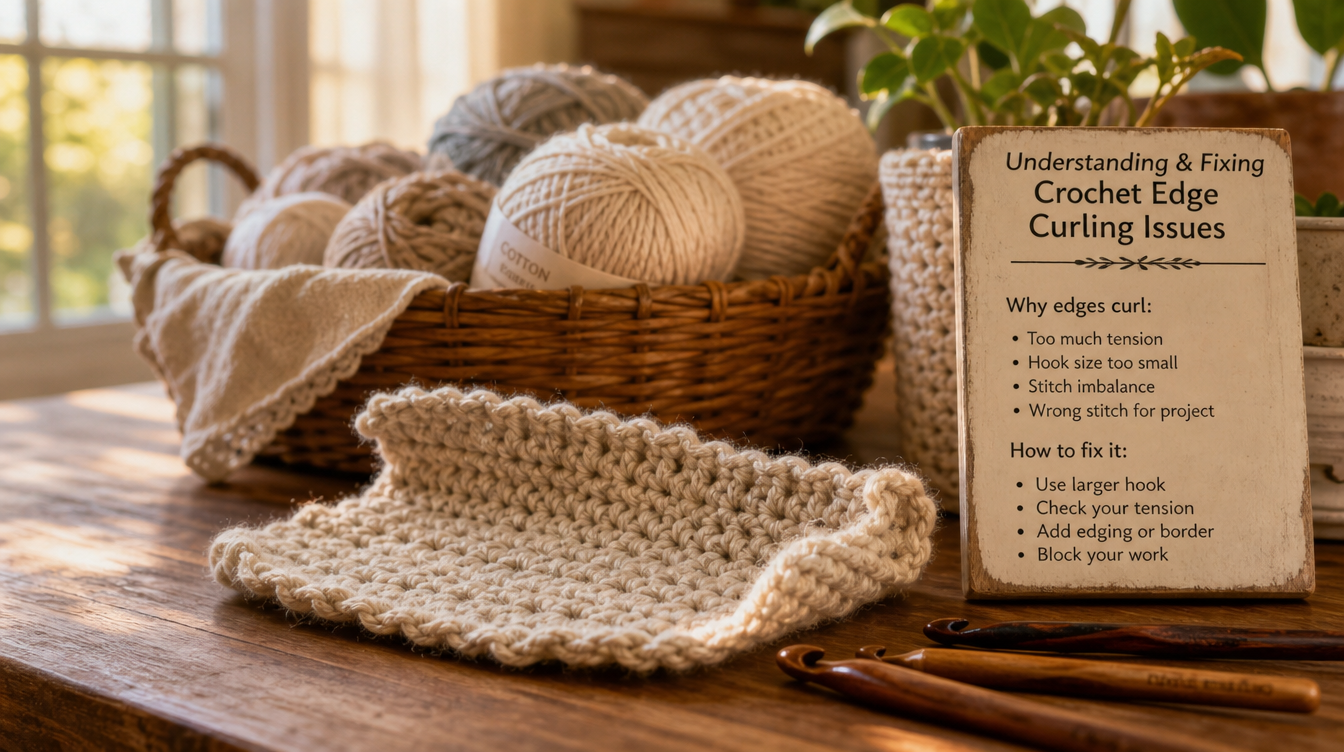
Understanding Crochet Edge Curling
Crochet is a beloved craft that produces beautiful, intricate designs, but even seasoned crocheters can encounter the frustrating problem of curling edges. Curling can affect the aesthetic of the finished piece, making it appear less professional and uneven. Understanding the causes of this common issue and learning how to prevent or correct it will allow you to enjoy smoother, flatter crochet projects.
Common Causes of Crochet Edge Curling
Uneven Tension
Tension is the tightness or looseness of your stitches and is crucial in crochet. Inconsistent tension can cause your fabric to pull inwards or ripple, leading to curling edges. If your tension is too tight, the edges might curl because the fabric is being pulled too tightly. On the other hand, if your tension is too loose, the edges may flare out. Practicing consistent tension throughout your project is essential to prevent curling.
Tight Foundation Chain
The foundation chain is the starting point of most crochet projects, and if it's too tight, it can cause the edges to curl. This is particularly true if you are working with a stitch pattern that naturally curls, such as ribbing or certain textured stitches. The foundation chain needs to have a bit of give so that the rows above can lay flat without being restricted.
Stitch Pattern
Some stitch patterns are inherently more prone to curling than others. For example, single crochet stitches are shorter and denser, which can lead to curling, especially if worked tightly. Similarly, ribbing or stitches that build height quickly, such as taller post stitches, can also contribute to curling. Understanding the characteristics of your chosen stitch can help you anticipate and mitigate this issue by preparing to block or adjust tension accordingly.
Preventing Crochet Edge Curling
Use a Larger Hook for the Foundation Chain
To avoid creating a foundation chain that is too tight, use a crochet hook one size larger than your main project hook when making this chain. For instance, if you're using a 5.0 mm (H-8) hook for your project, you might want to use a 5.5 mm hook for the foundation chain. This slight increase in hook size will provide the necessary elasticity to prevent curling.
Ensure Consistent Tension
Developing consistent tension requires practice and mindfulness. Take the time to find a grip and rhythm that allows you to maintain even tension throughout your project. Regularly pause to assess your work, checking that your stitches are uniform in size. If you find areas where tension varies, adjust your technique accordingly. Consistency will help prevent edges from curling as the fabric will lay more evenly.
Blocking the Finished Piece
Blocking is a technique used to shape and set your crochet pieces. It involves wetting or steaming your project and then pinning it to the desired dimensions until dry. This process helps to relax the fibers, correct curling, and give your piece a polished finish. There are two main methods of blocking: wet blocking and steam blocking.
Wet Blocking
Wet blocking involves soaking the crochet piece in water, gently squeezing out excess water, and then laying it flat on a towel. Use rust-proof pins to shape and secure the edges to a blocking board or another flat surface. Allow the piece to dry completely before removing the pins.
Steam Blocking
Steam blocking is suitable for more robust fibers, like wool. Hold a steam iron above the piece, allowing the steam to permeate the fibers without touching the fabric directly. Gently shape and pin the edges as needed. Steam blocking is faster than wet blocking but requires careful handling to avoid damaging the yarn.
Choosing the Right Materials
Yarn Type
The type of yarn you select can significantly impact how your crochet project behaves. Yarns with a high twist or those made from synthetic fibers are more prone to curling than natural fibers like wool or cotton. Natural fibers tend to have a softer drape and are more amenable to blocking, which can help reduce curling. When possible, choose yarns that are known for their drapability to achieve better results.
Yarn Weight and Hook Size
It's important to use the correct yarn weight and hook size as recommended for your pattern. For worsted weight yarns, a 5.0 mm hook is generally standard, while a 4.0 mm hook is typically used for DK weight yarns. Using the appropriate combination ensures that your stitches have the correct density and flexibility, reducing the likelihood of curling.
Troubleshooting and Correcting Curling
Adjusting Your Technique
If you notice curling midway through your project, consider adjusting your technique. Loosen your tension slightly or switch to a larger hook for the subsequent rows. This can help to balance out any tightness that may be causing the edges to curl.
Add a Border
Adding a border can be an effective way to weigh down the edges and reduce curling. Borders can be simple, such as a row of single crochet or slip stitches, or more decorative depending on your preference. The extra weight and structure provided by a border can help the edges to lie flat.
Frequently Asked Questions
Why do my crochet edges curl up?
Crochet edges can curl up due to uneven tension, a tight foundation chain, or using a stitch pattern that naturally curls.
How can I prevent my crochet edge from curling?
Using a larger hook for the foundation chain, ensuring consistent tension, and blocking the finished piece can help prevent curling.
Does yarn type affect curling?
Yes, some yarns, especially those with a high twist or synthetic fibers, can contribute to curling more than others.
By understanding the reasons behind crochet edge curling and implementing these strategies, you can achieve a clean, professional finish in your crochet projects. Remember, practice and patience are key to mastering any craft, and crochet is no different. Happy crafting!