Using a Crochet Pattern Difficulty Checker Effectively
Learn how to assess crochet pattern difficulty for your skill level with our interactive tool, ensuring the right project choice every time.
WeLovePattern Editorial Team
Understanding Crochet Pattern Difficulty
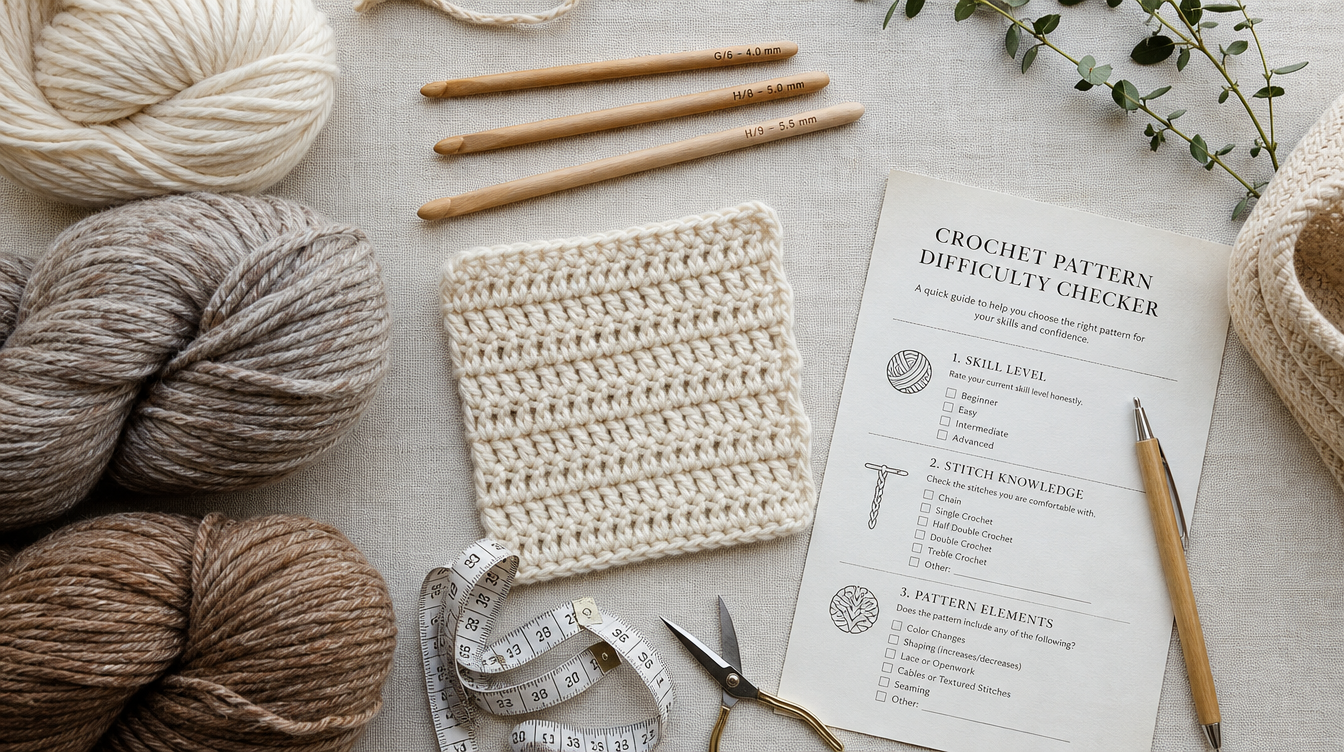
Crochet is a beloved craft that opens up a world of creativity and relaxation. However, selecting the right pattern for your skill level is crucial to ensuring an enjoyable and successful crafting experience. This is where understanding crochet pattern difficulty becomes important. Difficulty levels typically range from beginner to advanced, reflecting the complexity of stitches and techniques involved. Patterns usually indicate difficulty levels such as beginner, easy, intermediate, or advanced, based on the complexity of stitches and techniques.
Why Difficulty Levels Matter
Choosing a pattern that matches your skill level prevents frustration and encourages learning. Beginner patterns focus on basic stitches like single and double crochet, which are easier to master. In contrast, advanced patterns may incorporate intricate colorwork, shaping techniques, and textured stitches like bobbles and puff stitches, which consume more yarn and require more skill. Understanding these levels can help you plan your projects better and ensure successful execution.
Factors Influencing Pattern Difficulty
Several elements contribute to a pattern’s difficulty level:
- Stitch Complexity: Basic stitches like single and double crochet are foundational and often used in beginner patterns. Intermediate and advanced patterns might introduce more complex stitches like treble crochet or textured stitches, which demand greater attention and skill.
- Technique Variety: Patterns involving special techniques such as increases, decreases, or color changes increase difficulty. Complex colorwork or intricate shaping techniques might be present in more advanced patterns.
- Pattern Layout and Instructions: The complexity of the pattern’s instructions and layout can also influence difficulty. Detailed, multi-step instructions are often found in higher difficulty levels. Understanding how to interpret these instructions is key to successfully completing more complex projects.
Manual Steps to Assess Pattern Difficulty
While many patterns indicate their difficulty level, understanding the elements that contribute to these ratings can help you make informed decisions:
- Review the Stitches: Identify the types of stitches used in the pattern. Beginners should look for patterns using basic stitches.
- Analyze the Techniques: Check for special techniques such as increases, decreases, or color changes, which can increase difficulty.
- Consider the Pattern Complexity: Look at the pattern layout and instructions. The more detailed and complex, the higher the difficulty.
These steps provide a foundational understanding, but accurately assessing difficulty can be challenging without experience.
Introducing the WeLovePattern Pattern Difficulty Checker
To simplify the process, the WeLovePattern Pattern Difficulty Checker offers an interactive solution. This tool takes the guesswork out of determining pattern difficulty, allowing you to focus on creating. Simply input the techniques and stitches present in your pattern, and our checker will provide an accurate difficulty level, from beginner to advanced.
How to Use the Checker
- Gather Information: Review your pattern and note the stitches and techniques used.
- Input Data: Enter this information into the Pattern Difficulty Checker.
- Interpret Results: The tool will evaluate the complexity and present the difficulty level, helping you decide if the pattern suits your skills.
This tool not only helps beginners find suitable projects but also challenges experienced crafters with advanced patterns.
Benefits of Using the Pattern Difficulty Checker
Our Pattern Difficulty Checker offers several advantages:
- Accuracy: Avoid manual errors and ensure an accurate difficulty assessment.
- Time-Saving: Quickly determine if a pattern is right for you, without analyzing complex pattern details.
- Confidence Boost: Choose patterns that match your skills, reducing frustration and building confidence.
Additional Considerations for Successful Projects
Beyond selecting the right difficulty level, understanding gauge is crucial. Gauge ensures that your finished project matches the pattern's intended size. Using a different gauge can result in a project that is too large or too small. Always make a swatch to check your gauge before starting larger projects.
When it comes to yarn, selecting the right fiber type can affect your project’s outcome. Wool, acrylic, and cotton each have unique properties. Wool is warm and elastic, acrylic is versatile and affordable, and cotton is breathable and ideal for summer projects. Consider the project’s purpose and the yarn’s characteristics when selecting your materials.
Blocking and Finishing Techniques
Blocking is essential for achieving the intended shape and dimensions of your crochet project. Wet blocking involves soaking your project and reshaping it, while steam blocking uses heat and moisture to set the stitches. Choose a method based on your yarn type and project requirements.
Pattern Difficulty Checker
Interactive quiz to assess pattern difficulty level (Beginner to Advanced) based on techniques used.
Practical Troubleshooting Tips
Common issues include uneven tension and border curling. To address uneven tension, practice maintaining consistent tension throughout your work. For curling edges, consider adjusting your stitch count or incorporating border patterns to weigh down the edges.
Frequently Asked Questions
How can I determine the difficulty level of a crochet pattern?
Patterns usually indicate difficulty levels such as beginner, easy, intermediate, or advanced. These are based on the complexity of stitches and techniques.
What is the importance of gauge in crochet patterns?
Gauge ensures that your finished project matches the pattern's intended size. Using a different gauge can result in a project that is too large or too small.
Why do textured stitches require more yarn?
Textured stitches like bobbles and puff stitches create bulk and height, using more yarn compared to flat stitches.
In conclusion, using a crochet pattern difficulty checker is an invaluable tool for any crafter. Whether you're a beginner seeking to build skills or an advanced crocheter looking for a new challenge, understanding pattern difficulty ensures an enjoyable and rewarding crafting experience. For an accurate assessment and to enhance your crochet journey, explore our Pattern Difficulty Checker today.